Project Overview
The Village of Cumberland is considering updates to the Building Bylaw through Building Amendment Bylaw No. 1254, 2026. The proposed amendments would:
- Adopt the Energy Step Code in alignment with the BC Building Code.
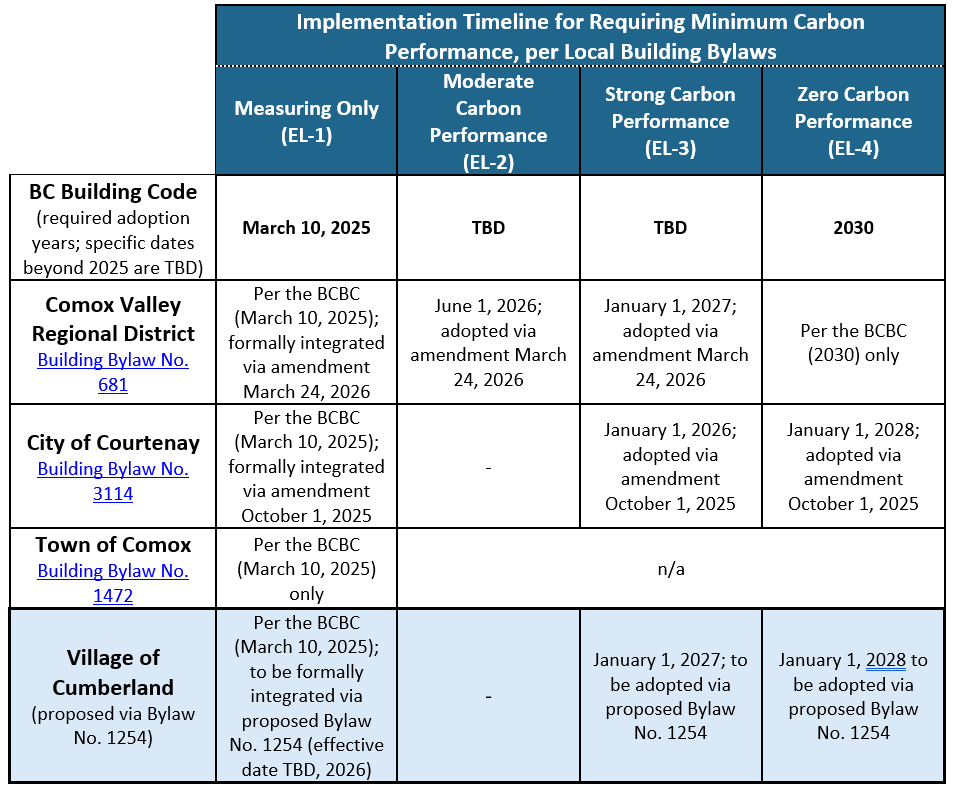
- Adopt the Zero Carbon Step Code (ZCSC) with an accelerated local timeline.
- Include housekeeping changes to improve clarity and support a simplified, transparent permitting approvals process.
- Consolidate and clarify requirements related to solid fuel burning appliances within the Building Bylaw.
This work supports implementation of Goal B3 in the Village’s Climate Action Plan (2024): requiring new homes and buildings to be net-zero ready and zero carbon.
What We’re Asking
Engagement Closed June 1, 2026
We’re looking for input—particularly from builders, designers, and others in the development community—on:
- Whether the proposed timeline is workable for projects currently in design or planning
- What tools would support implementation (e.g., checklists, permit submission requirements, FAQs)
- Transition considerations the Village should be aware of (e.g., coordination with energy advisors, supply chain, training)
- Any local conditions in Cumberland that should be considered as these requirements are introduced
Energy Step Code (Building Envelope Energy Efficiency)
The Energy Step Code sets performance targets for the energy efficiency of new buildings. Compliance is demonstrated through energy modelling and confirmed through on-site testing.
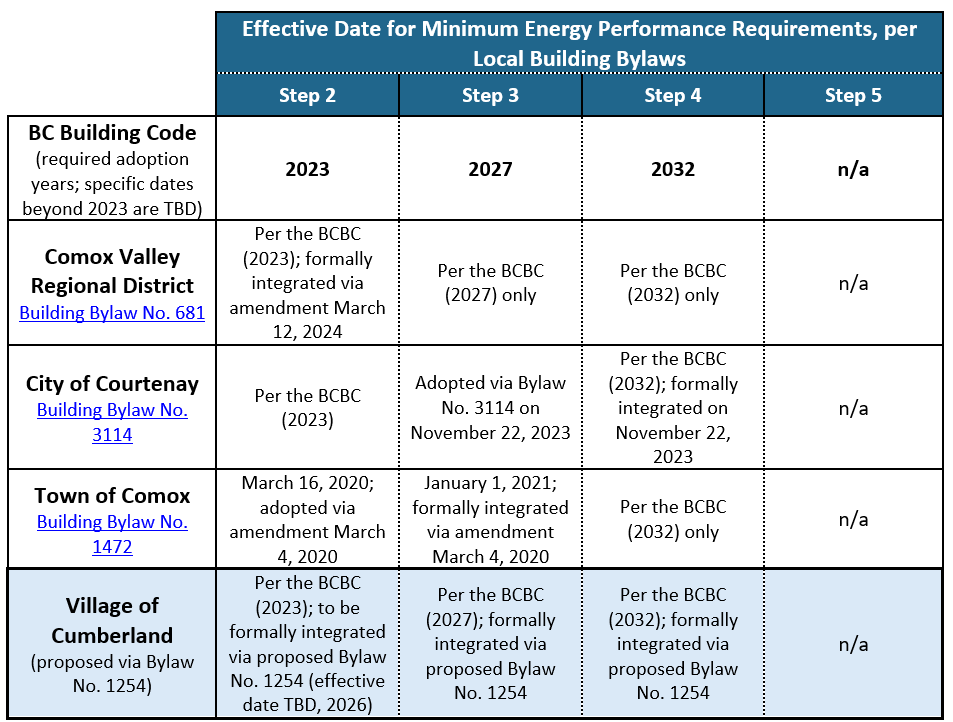
The proposed bylaw amendments would adopt the Energy Step Code in alignment with the BC Building Code timeline.
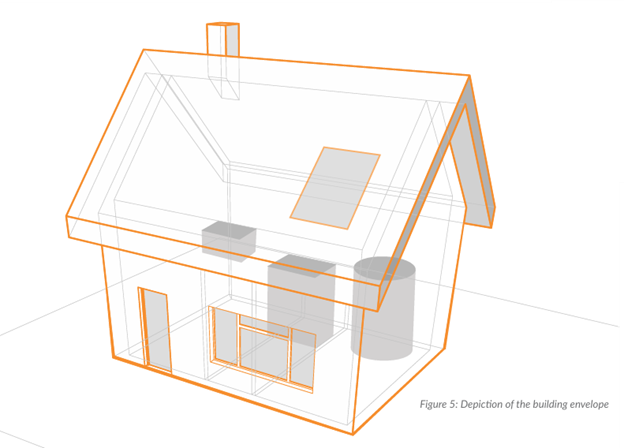
Visual of Building Envelope
The Energy Step Code applies to the energy efficiency of a structure's building envelope, highlighted here in orange.
Zero Carbon Step Code (ZCSC - Building Emissions)
The Zero Carbon Step Code sets performance targets to reduce greenhouse gas emissions from building systems (typically by shifting away from fossil-fuel-based space and water heating).
The proposed implementation timeline is:
- EL-3 (Strong Carbon Performance): effective January 1, 2027
- EL-4 (Zero Carbon Performance): effective January 1, 2028
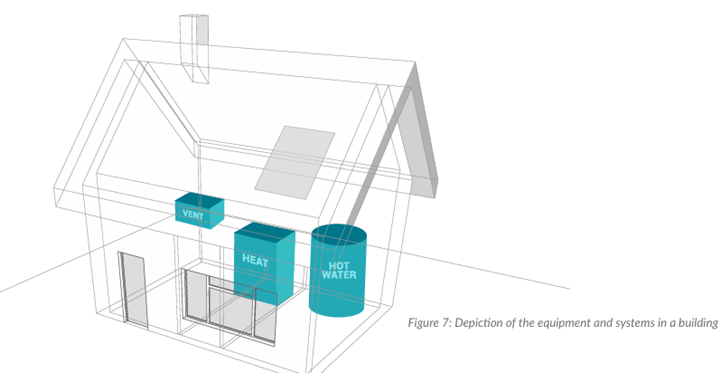
Visual of Building Equipment and Systems
The Zero Carbon Step Code applies to greenhouse gas emissions from the building systems, highlighted here in teal.
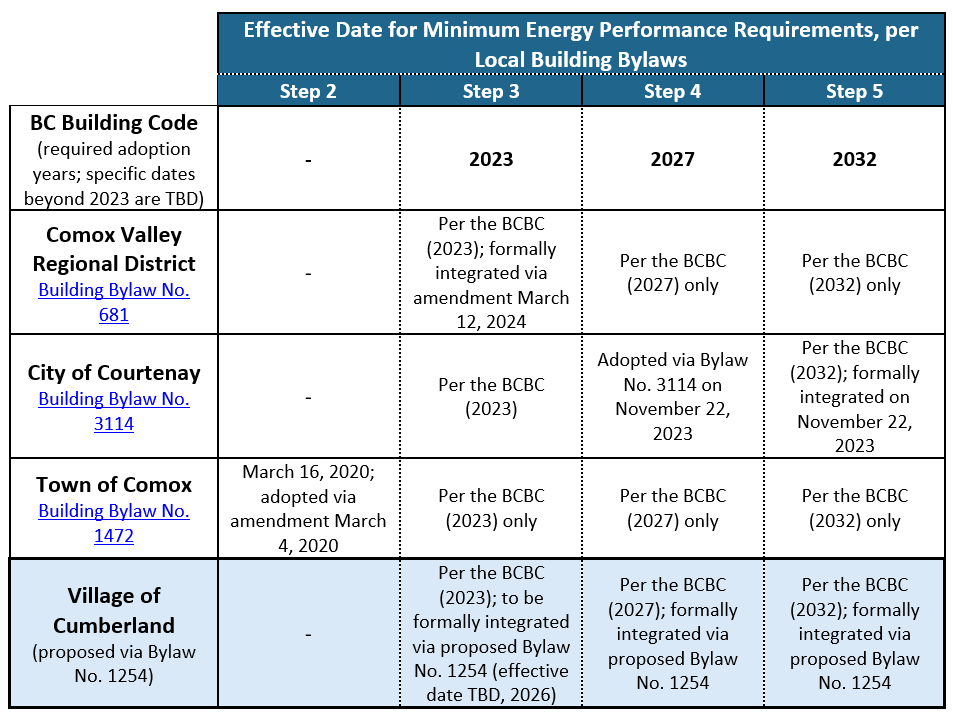
Step Code Adoption Timelines in the Comox Valley
Capital Costs for Zero Carbon Step Code by Climate Zone
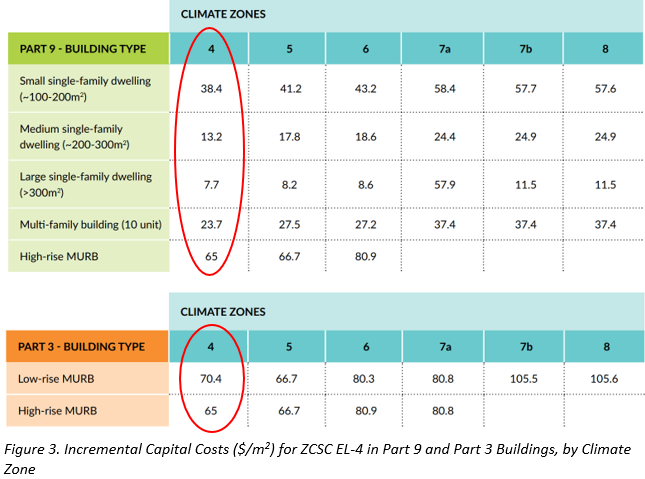
The Step Codes Best Practices Guide (pg. 31) also includes detailed incremental capital cost estimates for implementing the ZCSC across each of the Province’s climate zones (see Figure 3; the Village is located in Climate Zone 4).
Overall, the construction cost premiums associated with meeting the requirements of the Zero Carbon Step Code are more predictable than those associated with those of the Energy Step Code, as compliance with the higher ZCSC Steps can typically be achieved by installing a zero-emission heating and/or hot water system. And, as with the Energy Step Code, smaller homes are anticipated to have a higher relative incremental capital cost than their EL-1 counterpart because some measures do not scale with home size (e.g. an entirely electric heating/cooling system is required for EL-4, regardless of the home’s size).
It is important to note that the incremental capital costs associated with both the Energy and Zero Carbon Step Codes are not cumulative, as achieving compliance with one Step Code tends to reduce the cost of meeting the other due to the co-benefits of equipment and/or material choice. And, as energy advisors can provide the services required to demonstrate compliance with both Step Codes concurrently (i.e., airtightness testing and energy modelling), accelerated adoption of the ZCSC is not anticipated to incur substantial increases to the ‘soft costs’ of construction.